About

I came to Earth observation through planetary science.

My training is in planetary science, and I spent the first part of my career modeling comets, asteroids, and other small bodies. Since 2019, my day-to-day work has centered on calibration of Earth-observing instruments at NASA Goddard through SSAI. I still work in planetary science, so the two fields now run in parallel.

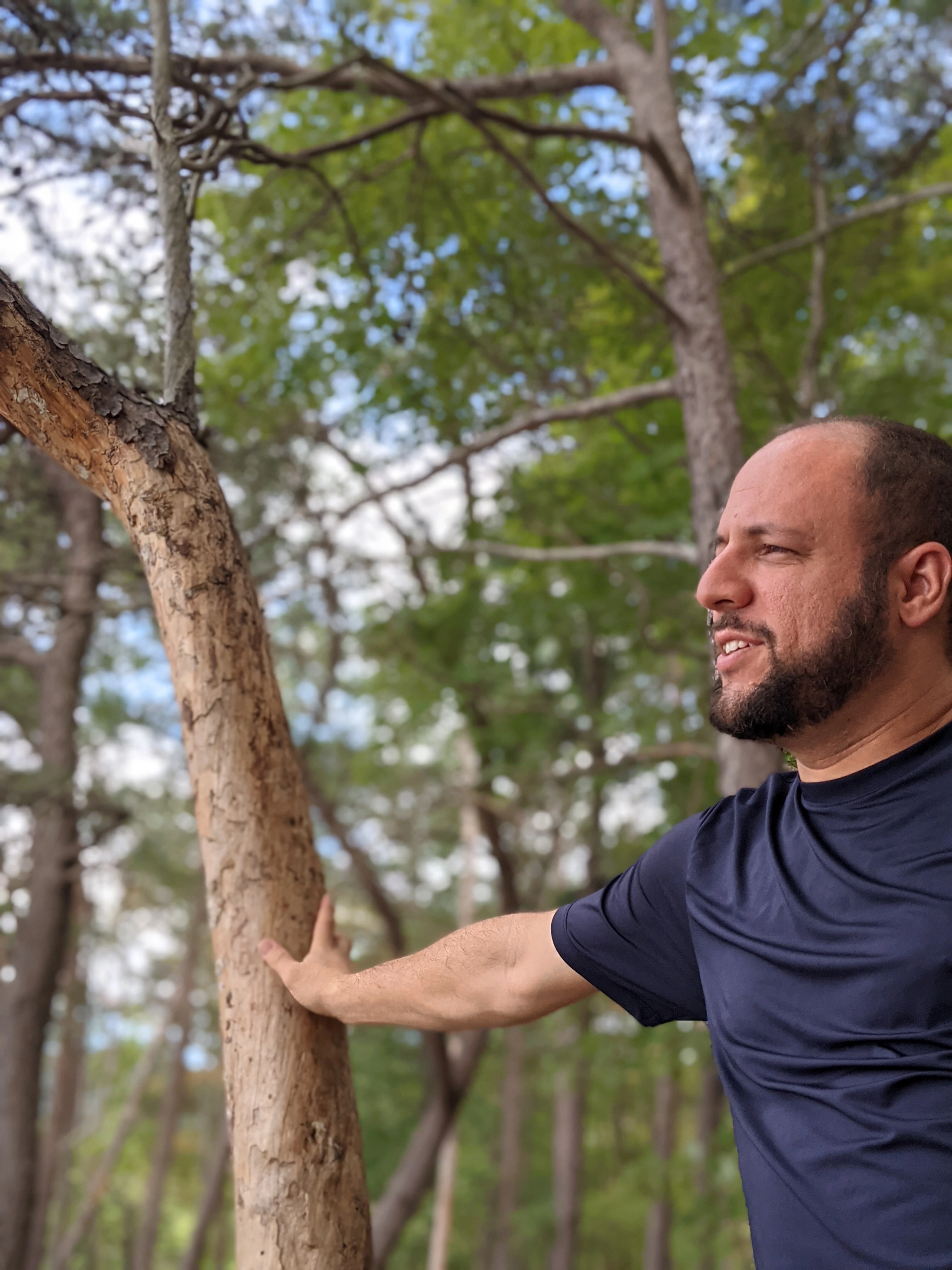
Portrait of Gal Sarid outdoors
Gal Sarid.
Background

Education and current work

I received a Ph.D. in Geosciences (Planetary Sciences) from Tel Aviv University in 2010. My doctoral and early postdoctoral work focused on planetary science, especially the thermal, chemical, and dynamical evolution of comets and other icy bodies.

At the University of Hawai‘i and Harvard University, that work expanded into observations, larger numerical simulations, collision and shock problems, and mission-related studies. At the University of Central Florida, I continued my research on cometary, asteroid, and planet-formation science, as well as development of space exploration mission concepts and space-borne instrumentation.

Today I am a Senior Research Scientist at Science Systems and Applications, Inc. (SSAI), working at NASA Goddard Space Flight Center. I'm involved in cailibration and data analysis of the Terra/Aqua MODIS and the NOAA-21/NOAA-20/Suomi-NPP VIIRS instruments, as well as development of planetary science and space exploration concepts.

The subject matter changed more than the working style did: build a physical picture, write down the assumptions, compare it with measurements, and keep revising until the pieces agree.
Experience

Research appointments

2009–2012

University of Hawai‘i

Postdoctoral researcher at the Institute for Astronomy and research fellow with the NASA Astrobiology Institute. Work included observations, data analysis, thermal modeling, main-belt comets, and mission-related studies.

2012–2014

Harvard University

Postdoctoral Research Associate in Earth and Planetary Sciences. Computational work included shock physics, physical and chemical processing, and early planet-formation environments.

2014–2019

University of Central Florida

Research faculty at the Florida Space Institute and Dept. of Physics, working on general planetary physics, small-body characterization studies (comets and asteroids), and space mission and instrumentation development.

2019–present

SSAI · NASA Goddard support

Senior Research Scientist supporting calibration and data analysis of Earth observation satellites and development of planetary exploration concepts.

Mission involvement

Missions and mission concepts

I have contributed at several different stages, from mission-related research and observing campaigns to proposal concepts and investigation teams.

Deep Impact

Tempel 1 research

My Ph.D. work (Tel Aviv U.) included modeling of Comet 9P/Tempel 1 and simulations of the planned Deep Impact experiment, working with Prof. Dina Prialnik, a mission collaborator. This was mission-related research rather than a formal mission-team role.

2005 paper ↗

EPOXI

Hartley 2 observing campaign

At the U. of Hawai‘i, I participated in EPOXI-related research and analysis of data from the worldwide campaign for Comet 103P/Hartley 2.

Campaign paper ↗

Proteus

Discovery mission concept

During my U. of Hawai‘i postdoc appointment, I contributed to development of Proteus, a NASA Discovery mission concept led by Prof. Karen Meech to study main-belt comet 238P/Read and the origin of terrestrial water.

Public concept overview ↗

Chimera

Discovery proposal Co-I

I was a Co-I and part of the founding concept-development team for Chimera, a 2019 NASA Discovery proposal to study the active Centaur 29P/Schwassmann–Wachmann 1, led by U. of Arizona (W. Harris).

Public mission abstract ↗

DART

Investigation Team

I joined the DART Investigation Team in 2018, contributing to working groups on dynamics and ejecta, related to the binary Didymos-Dimorphos asteroid system and the impact experiment.

Related ejecta paper ↗

Rubin Observatory

Solar System Science Collaboration

I've been serving as a publication coordinator on the SSSC leadership team, helping Rubin-related solar system work manuscripts move through the publication-policy process and support other collaboration policy activities.

Publication policy ↗